Consumer debt in the United States continues to rise, but not all states carry the same financial burden.
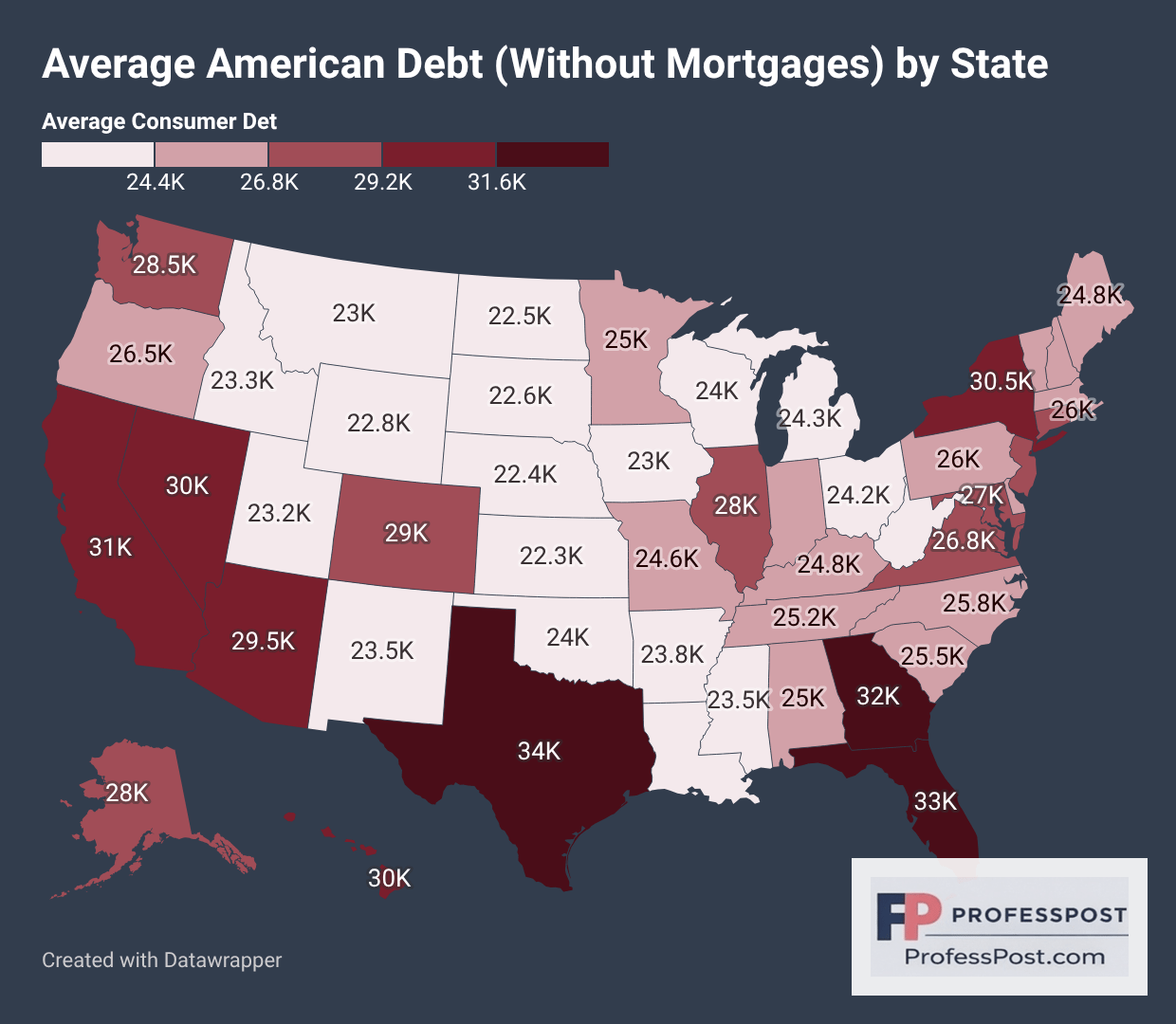
This breakdown looks at average debt per person by state (excluding mortgages), focusing on credit cards, auto loans, student loans, and personal loans.
According to recent data, the average non-mortgage debt in the U.S. is around $36K per person, showing how common consumer borrowing has become across the country.
What Counts as Consumer Debt?
This analysis includes:
- Credit card balances
- Auto loans
- Student loans
- Personal loans
It does not include mortgages, which make up nearly 70% of total household debt in the U.S.
Highest Debt States (No Mortgage)
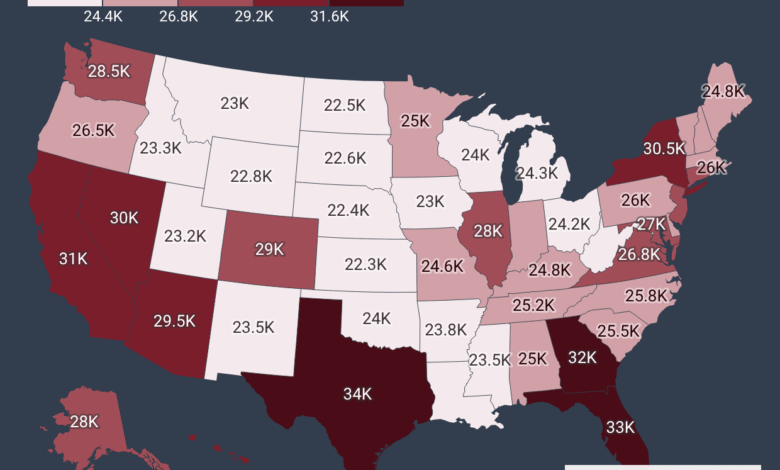
- Texas — ~$34,000
- Florida — ~$33,000
- Georgia — ~$32,000
- California — ~$31,000
- New York — ~$30,500
Lowest Debt States (No Mortgage)
- West Virginia — ~$22,000
- Iowa — ~$23,000
- Wisconsin — ~$24,000
- Kansas — ~$22,300
- Nebraska — ~$22,400
Why Debt Varies by State
Debt levels vary widely due to several factors:
- Cost of living differences
- Income levels and job markets
- Housing and transportation costs
- Spending behavior and lifestyle inflation
Interestingly, higher-income states don’t always have lower debt. In many cases, higher earnings lead to increased spending and borrowing.
Full Breakdown by State
For a more detailed breakdown of consumer debt across all 50 states, including additional insights and data points, check out this full analysis:
👉
Average Consumer Debt by U.S. State (Full Breakdown)
Final Thoughts
Consumer debt remains a key part of financial life in America. While some debt can be strategic, high-interest debt — especially credit cards — can quickly become a long-term burden.
Understanding how your state compares can provide valuable context for your own financial situation.
Sources & References
-
LendingTree — Consumer Debt by State Report
-
Experian — U.S. Consumer Debt Study
-
Federal Reserve — Household Debt and Credit Report
-
New York Fed — Household Debt and Credit Data
-
USAFacts — Average American Debt Overview