How Much Do Cybersecurity Analysts Earn by City in 2026?


Cybersecurity analyst pay varies widely by location. Here’s how median salaries compare across major U.S. cities in 2026 and which markets pay the most.
Cybersecurity analysts are among the fastest-growing and highest-paid professionals in the U.S. As cyber threats rise and regulations tighten, companies are paying a premium for talent — but where you work still makes a major difference.
In this guide, we compare the median cybersecurity analyst salary by city in 2026, analyze which metros pay the most, and explain how cost of living and industry concentration affect real earnings.
Median Cybersecurity Analyst Salary by City (U.S.)
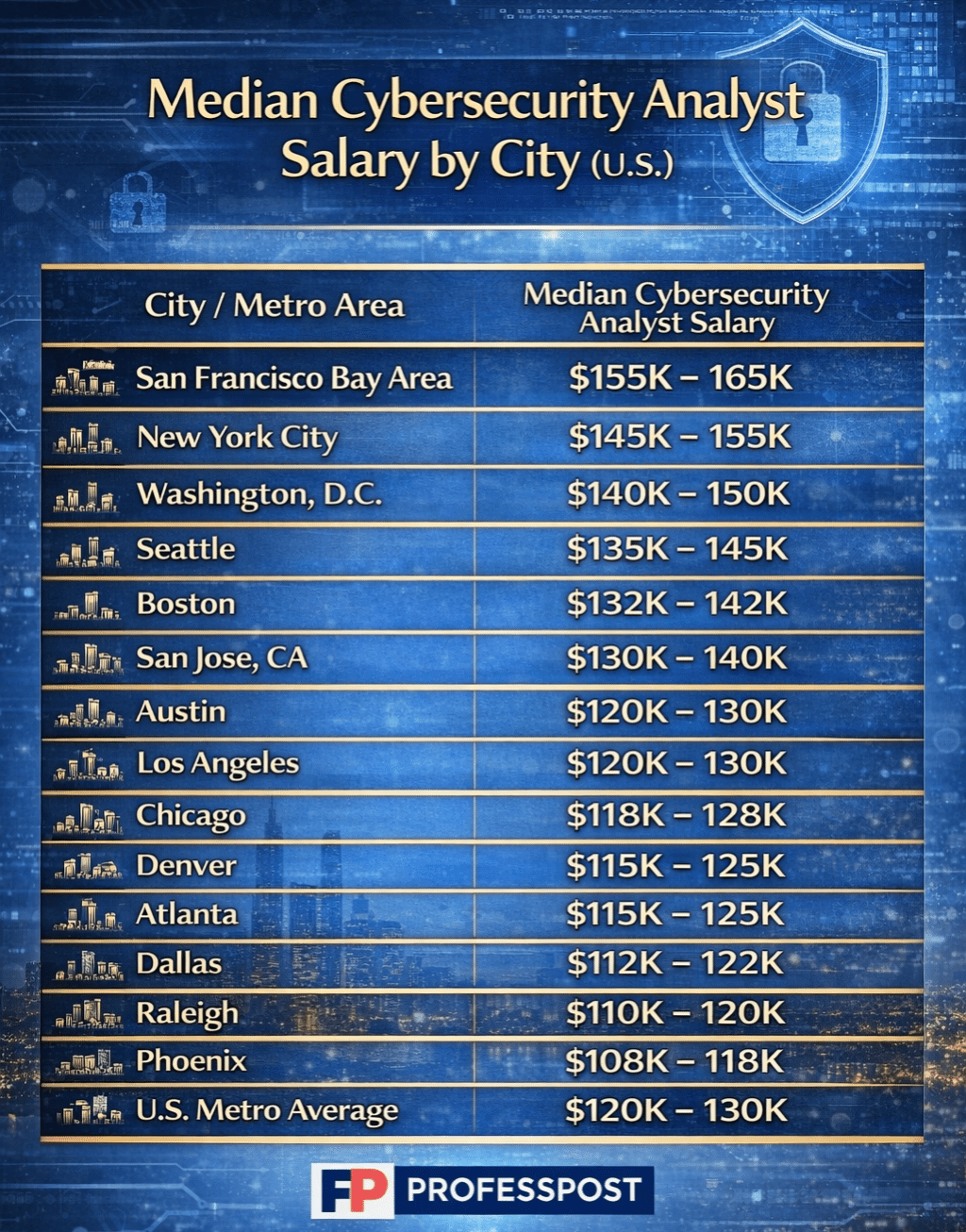
The table below shows estimated median base salaries for cybersecurity analysts across major U.S. metro areas. These figures reflect typical pay for mid-level professionals and exclude bonuses, equity, and one-time incentives.
Top-Paying Cities for Cybersecurity Analysts
- San Francisco Bay Area : Home to major tech firms and cloud security companies, the Bay Area leads the nation in cybersecurity compensation. However, housing and taxes significantly reduce real take-home value.
- New York City : NYC’s finance, fintech, and enterprise sectors drive strong demand for cybersecurity professionals, especially those with experience in risk management and compliance.
- Washington, D.C. : One of the strongest markets due to government agencies, defense contractors, and security-cleared roles. Analysts with clearance often earn well above the median.
- Seattle : Driven by cloud infrastructure and Big Tech, Seattle offers high salaries with no state income tax, making it one of the best cities for real earnings.
- Boston : Healthcare, biotech, and research institutions create steady demand for cybersecurity analysts, particularly in regulated environments.
Salary vs Cost of Living: Where Cybersecurity Analysts Get the Best Value
Headline salary figures don’t tell the full story for cybersecurity professionals.
Cities with growing tech ecosystems and lower housing costs often deliver stronger day-to-day affordability than legacy tech hubs. In these markets, analysts can save more, reduce housing pressure, and maintain flexibility without sacrificing career growth.
Meanwhile, some high-pay metros offset large paychecks with elevated taxes, rent, and commuting costs. The result is that a slightly lower nominal salary in a balanced market can translate into greater financial stability and long-term savings.
For many cybersecurity analysts, real value comes from earning competitively while avoiding extreme living expenses, not simply chasing the highest listed salary.
What Drives Cybersecurity Analyst Pay by City?
Several factors influence local salary levels:
- Government & defense presence
- Financial and enterprise concentration
- Security clearance requirements
- Industry regulations (healthcare, finance)
- Experience level and certifications (CISSP, CISM, cloud security)
Frequently Asked Questions
What city pays cybersecurity analysts the most? The San Francisco Bay Area typically offers the highest median salaries, though Washington, D.C. can surpass it for cleared roles.
Is $130K a good cybersecurity analyst salary? Yes. $130K is above the national median and provides strong purchasing power in many U.S. cities.
Do cybersecurity analysts earn more than software engineers? In regulated industries and government contracting, cybersecurity analysts often match or exceed software engineer pay.
Is cybersecurity still a good career in 2026? Yes. Demand continues to grow due to AI risks, cloud security needs, and stricter regulations.