How 5 Major U.S. Professions Kept Up With Inflation (2015 → 2025)

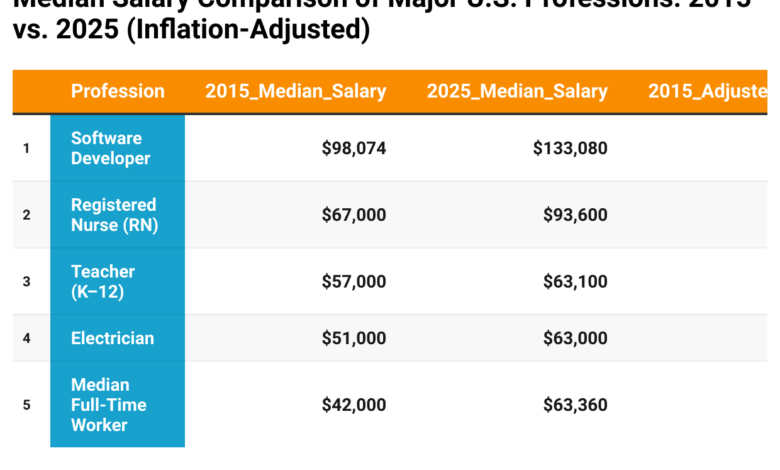
Inflation has reshaped real earnings across the U.S. This quick comparison shows how median salaries in five major professions changed from 2015 to 2025 after adjusting for rising prices.
Over the last decade, U.S. inflation rose by roughly 37%, meaning a worker earning $60,000 in 2015 would need about $82,000 today just to have the same purchasing power. But not all professions kept up equally. Some saw real income gains — others fell behind.
Below is a clear comparison of how median salaries in five major professions changed between 2015 and 2025, and whether those changes beat inflation.
Key Takeaways From the Numbers
1 – Software Developers: Just Broke Even
Software salaries did grow, but only slightly above inflation. After adjusting 2015 earnings to 2025 dollars, developers saw a small real decrease (≈ –$1,300).
Tech pay grew, but not as explosively as people assume.
2 – Registered Nurses: Slightly Ahead of Inflation
RNs are one of the few professions that actually saw a real wage gain. 2025 median RN pay outperforms inflation by roughly +$1,800 — small, but positive.
3 – Teachers: The Biggest Losers in Real Wages
K–12 teachers saw the most dramatic decline. A 2015 teacher’s salary adjusted to 2025 dollars is about $78,000 — far above today’s median of ~$63,100. This equals a real loss of nearly $15,000 a year.
4 – Electricians: Slight Real Decline
Electricians had steady nominal wage growth, but not enough to keep up with rising costs.
Result: a real decrease of ~–$6,870 relative to inflation.
5 – The Median Full-Time Worker: Real Gains
Overall, full-time U.S. workers actually beat inflation over the decade.
Median full-time pay grew from ~$42,000 (2015) to ~$63,360 (2025), creating a real gain of ~$5,820.