How Much Property Tax Do NYC Homeowners Pay?
Property taxes are one of the most confusing parts of homeownership in New York City. Many buyers assume taxes in NYC must be extremely high because of the city’s cost of living. Surprisingly, the system works very differently compared with most U.S. cities.
Instead of taxing the full market value of a property, New York City uses a complex assessment system that often results in lower effective property tax bills than people expect. In this guide, we break down how NYC property tax works, what homeowners typically pay, and why two homes with the same price can have very different tax bills.
How NYC Property Tax Works
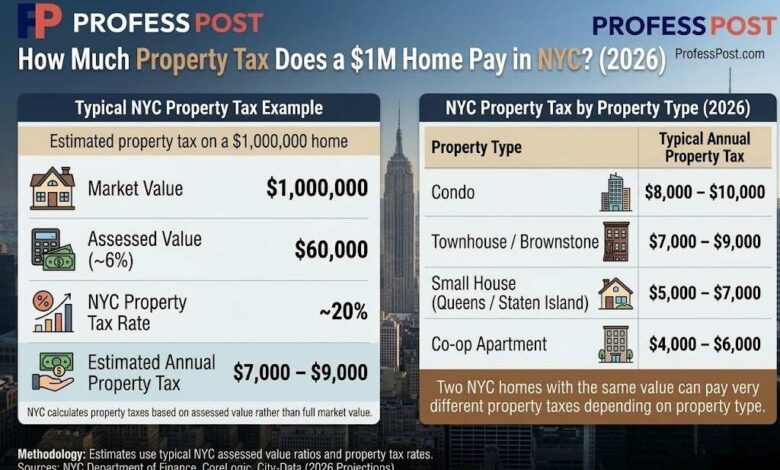
Unlike many other cities, New York does not calculate property taxes directly from the market value of a home. Instead, the city determines an assessed value first and then applies the property tax rate.
For many residential properties, the assessed value is often around 6% of the home’s market value.
Example calculation:
- Home Market Value: $1,000,000
- Assessed Value (~6%): $60,000
- Property Tax Rate: about 20%
- Estimated Annual Property Tax: $7,000 – $9,000
NYC Property Tax by Property Type
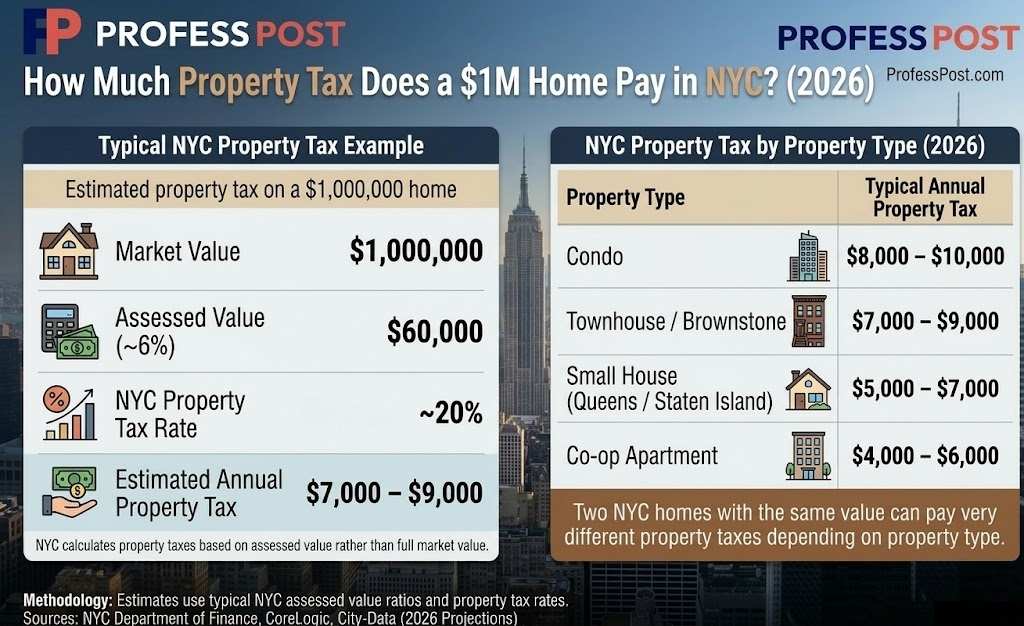
One of the biggest factors affecting your property tax bill is the type of property you own. Two homes worth the same amount can pay very different taxes depending on whether the property is a condo, co-op, townhouse, or small house.
| Property Type | Typical Annual Property Tax |
|---|---|
| Condo | $8,000 – $10,000 |
| Townhouse / Brownstone | $7,000 – $9,000 |
| Small House (Queens / Staten Island) | $5,000 – $7,000 |
| Co-op Apartment | $4,000 – $6,000 (often included in maintenance) |
Property Taxes Are Only One Part of NYC Housing Costs
Property taxes are just one part of the total cost of living in New York City. Housing expenses also include mortgage payments, utilities, insurance, and maintenance.
To understand how homeownership costs vary across the city, see our guide on
monthly mortgage payments in New York City by neighborhood.
If you’re still renting, our analysis of the
NYC rent-to-income ratio by neighborhood shows where rent takes the biggest share of income.
Other Costs to Consider
Homeowners should also account for transportation costs. If you own a vehicle in the city, insurance costs can vary widely. Our guide to
car insurance in NYC explains realistic monthly estimates.
Where Wealthy Homeowners Live in NYC
Luxury neighborhoods often have significantly higher property values, which means higher total property tax bills. If you’re curious where the city’s wealthiest residents live, see our ranking of the
richest neighborhoods in New York City.
Final Thoughts
Despite its reputation for high taxes, New York City’s property tax system often results in lower effective tax rates than many major U.S. cities. However, the system can be confusing for first-time buyers.
Understanding how assessed values, property types, and housing costs interact can help buyers make better decisions when planning a home purchase in NYC.
Data Methodology
The estimates in this article are based on publicly available housing and property tax data for New York City. Figures are simplified examples designed to illustrate how NYC property taxes typically work.
- Example home value used: $1,000,000
- Typical assessed value assumption: ~6% of market value
- Estimated residential tax rate applied to assessed value: ~20%
- Property type comparisons reflect common ranges across NYC condos, townhouses, small homes, and co-ops.
Actual property tax bills can vary depending on property classification, assessment caps, abatements, and exemptions.
Sources:
About the Author
Max Forsberg is the founder of ProfessPost and a writer focused on housing costs, real estate data, and personal finance in major U.S. cities. His work analyzes topics such as NYC property taxes, rent affordability, and mortgage costs using publicly available housing market data.
Through ProfessPost, he publishes data-driven guides that help readers better understand the real cost of living in cities like New York, Seattle, and San Francisco.
Connect with him on
LinkedIn.