The NYC Neighborhoods Where Rent Increased Faster Than Income (2016–2026)


The NYC Neighborhoods Where Rent Increased Faster Than Income (2016–2026)
For many New Yorkers, it feels like rent has been rising faster than paychecks for years.
According to neighborhood-level data trends across New York City, that feeling is backed by reality.
Between 2016 and 2026, median rents increased significantly across many NYC neighborhoods—often outpacing growth in median household income (HHI). In some areas, rents surged nearly twice as fast as local incomes, widening the affordability gap and making it harder for residents to keep up.
This analysis compares rent growth and income growth across major NYC neighborhoods to see where affordability changed the most over the last decade.
The Biggest Affordability Gaps in NYC
In every neighborhood included in this analysis, rent growth exceeded median household income growth between 2016 and 2026.
The largest gaps appeared in high-demand neighborhoods that experienced rapid development, migration, and increased housing demand.
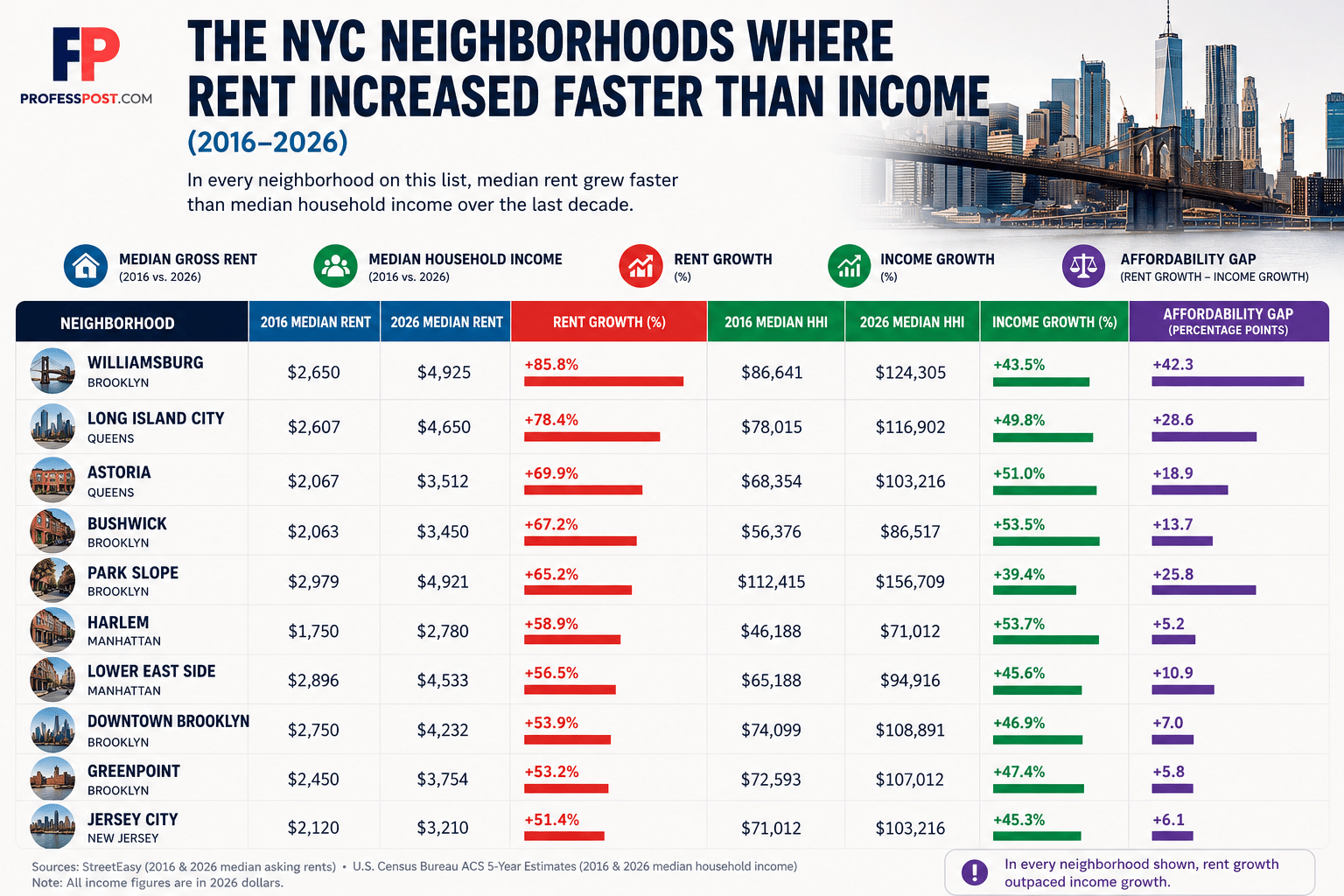
Williamsburg, Brooklyn
One of the largest rent-growth gaps in New York City.
- 2016 Median Rent: ~$2,650
- 2026 Median Rent: ~$4,925
- Rent Growth: +85.8%
- 2016 Median Household Income: ~$86,641
- 2026 Median Household Income: ~$124,305
- Income Growth: +43.5%
While household income increased substantially, rent growth moved far faster. Williamsburg transformed from a trendy Brooklyn neighborhood into one of the city’s most expensive rental markets.
Long Island City, Queens
Long Island City saw one of the sharpest rental increases in Queens as luxury development and proximity to Manhattan drove demand higher.
- Rent Growth: +78.4%
- Income Growth: +49.8%
The neighborhood experienced major residential expansion over the decade, but affordability became increasingly difficult for many residents.
Astoria and Bushwick
Traditionally more affordable neighborhoods also experienced rapid rent acceleration.
Astoria saw rents rise nearly 70%, while Bushwick experienced major growth as Brooklyn demand expanded outward from Williamsburg and Downtown Brooklyn.
Even though incomes increased in both neighborhoods, rent growth still moved faster.
Why Rent Is Rising Faster Than Income
1. Housing Demand Outpaced Supply
NYC added new housing over the last decade, but demand in desirable neighborhoods grew even faster—especially after the pandemic-era migration shifts.
2. Higher-Income Migration
Many neighborhoods experienced an influx of higher-income residents, increasing competition for apartments and pushing rents upward.
3. Remote and Hybrid Work
Remote work changed housing preferences across the city. Larger apartments and desirable neighborhoods became even more competitive.
4. Limited Affordability in Manhattan
As Manhattan rents surged, surrounding neighborhoods in Brooklyn and Queens saw spillover demand.
The Affordability Gap Explained
This analysis uses an affordability gap metric:
Rent Growth (%) – Income Growth (%)
A larger gap means rents increased much faster than household income, making neighborhoods less affordable over time.
Williamsburg showed one of the largest gaps in the dataset, with rent growth outpacing income growth by more than 40 percentage points.
NYC’s Housing Problem Is No Longer Just Manhattan
One of the biggest shifts over the last decade is that affordability pressure spread far beyond Manhattan.
Neighborhoods once considered relatively affordable—including parts of Queens and Brooklyn—now face dramatically higher rental costs.
For many households, income growth simply has not kept pace with the cost of housing.
How This Compares Nationally
New York City is not alone.
Across the United States, many cities saw home prices and rents rise faster than incomes between 2016 and 2026.
Related analyses:
- Where a $150K Salary Still Feels Rich in America
- The San Francisco Neighborhoods Where $100K Still Works
- NYC Neighborhoods Where Household Income Grew the Most
Methodology
- Median rent estimates based on StreetEasy and neighborhood market trends
- Median household income (HHI) data based on U.S. Census Bureau ACS 5-Year Estimates
- 2016 baseline compared with latest available 2024–2025 data to estimate 2026 values
- All income figures adjusted for inflation
- Neighborhoods selected based on data availability and market relevance
Note: 2026 figures are modeled estimates based on recent rent and income trends and are not final Census figures.
Final Takeaway
In many NYC neighborhoods, rent growth has outpaced income growth for years.
Even as household incomes increased across the city, rents often rose significantly faster—making affordability one of the defining challenges of modern New York City.
For many residents, earning more money no longer guarantees keeping up with the cost of living.